


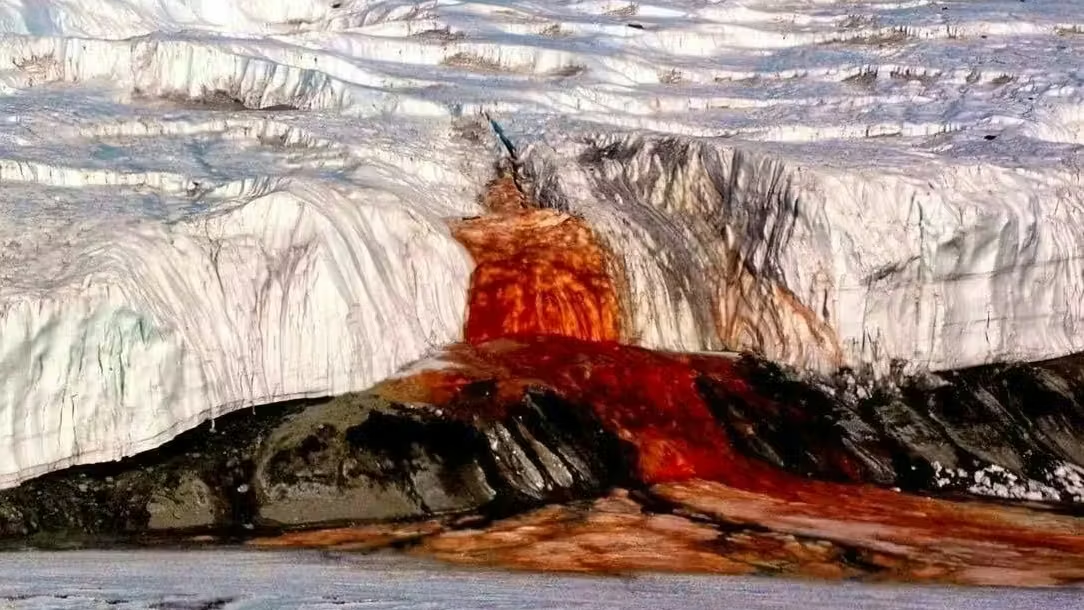
A red spot in a world of white
Imagine the coldest, most silent landscape imaginable. Endless fields of ice, an air that feels like glass, and then… a glacier that suddenly “leaks” red. Not a little pink, but a deep rusty red, as if the ice has a wound.
That place really exists. And it’s not a movie trick, not an edited photo, and not an urban legend. This phenomenon is called Blood Falls, and it flows from the Taylor Glacier in Antarctica, into the McMurdo Dry Valleys.
It’s not blood, but it looks frighteningly like it.
The red color doesn’t come from blood, nor from algae, as people once thought. What you see is extremely salty brine, water so salty it can remain liquid at temperatures well below freezing.
This brine is full of dissolved iron. As soon as it seeps out and comes into contact with oxygen, the iron begins to oxidize. Just as metal rusts, this water “rusts” in place. This rusty effect colours the ice an intense reddish brown, and that is precisely what causes the infamous “bleeding”.
How can liquid water even emerge from a glacier?
It sounds impossible: Antarctica is a deep freeze, and a glacier is literally ice. Yet this can continue to happen due to a combination of two things:
- Salt lowers the freezing point: the saltier the water, the harder it freezes.
- A hidden system within the ice: researchers have found evidence of a network of brine channels and reservoirs within and beneath the glacier, which feeds the outflow.
This means that Blood Falls isn’t a one-off stunt, but a true hydrological system that occasionally “vents” through cracks and openings at the glacier edge.
A subterranean world that lives without sunlight
And here’s where things get truly strange. Microbes appear to live in that salty, dark, cold environment. No sunlight, little to no oxygen, and yet they survive through chemical reactions involving sulfur and iron compounds, among other things.
For scientists, this is invaluable: if life can do this in Antarctica, what’s possible on icy worlds like Mars or the moon Europa?
Why Blood Falls fascinates people so much
Because it’s a perfect collision of beauty and horror. Your mind says, “Glaciers aren’t supposed to bleed.” But your eyes say, “They do.”
And the best part is: the explanation isn’t magic, but physics, geochemistry, and microbiology, all rolled into one bizarre waterfall moment. Blood Falls is a reminder that Earth still has places that feel like visiting another planet, but real.


