


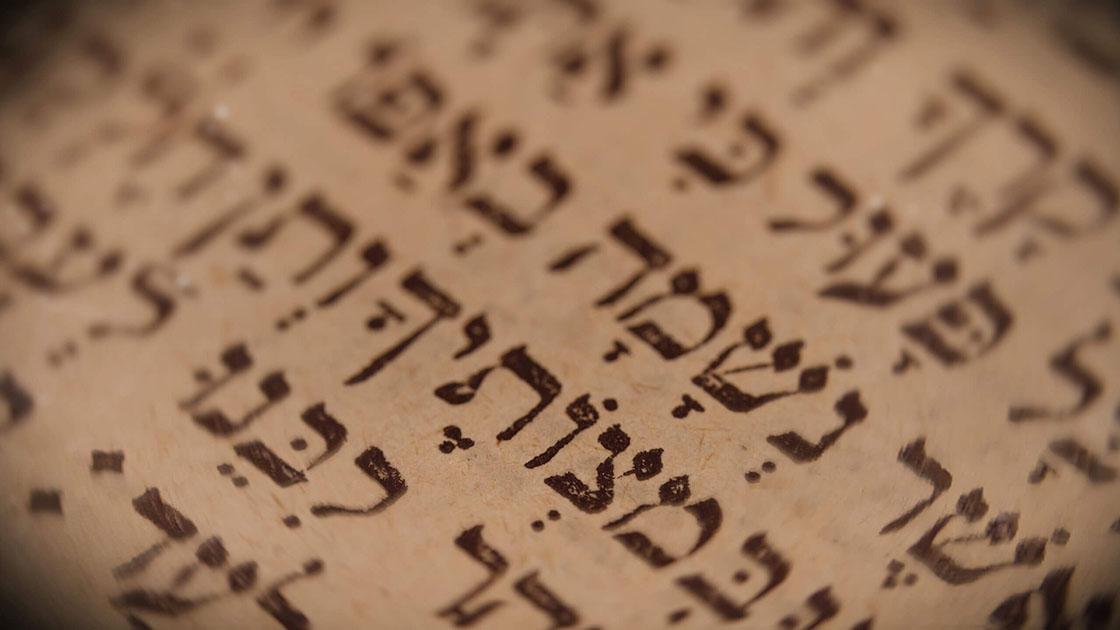
A language you no longer heard on the streets
Imagine a language you hardly ever hear in everyday life anymore. No children playing with it. No arguments in the kitchen. No songs on the tram. It still lives, but mainly on paper, in prayers, in ancient texts.
That was the situation of Hebrew for centuries: it survived as a sacred and literary language, but as a common spoken language, it had all but disappeared. And then something rare in history happened: people decided not only to “preserve” that language, but to push it back into real life. Hard. Consciously. Every single day.
The man who took a language as a mission
In the late 19th century, Eliezer Ben Yehuda came to Jerusalem with an idea that sounded absurd to many at the time: Hebrew had to become the language of everyday life again. Not just for books, but for groceries, school, love, anger, humor, everything.
He immediately made it extremely concrete. In his own home, Hebrew became the rule. And even more striking: he wanted his children to grow up with it as if it were the most normal thing in the world. In a time when people in and around Jerusalem often spoke different languages, this was a radical choice.
From living room to classroom, and then to the street
A language only truly comes alive when children use it without thinking. The next step, therefore, was education. During this period, Hebrew schools emerged, and the idea grew that modern knowledge could also be taught in Hebrew.
But there, a problem arose: how do you talk about trains, newspapers, electricity, politics, and modern science in an “old” language? You have to create words. Lots of words. And you have to agree on which words “stick.”
That’s why language committees were formed to collect, reuse, renew, and disseminate vocabulary. It was language building as infrastructure: you build roads so people will automatically drive on them.
The official breakthrough
The step from movement to power occurs when governments begin to recognize language. During the period of British rule in Palestine, Hebrew gained an official place alongside other administrative languages. That sounds administrative, but the effect is enormous: official texts, forms, courts, education—these are all places where a language builds muscle.
And after the establishment of the State of Israel in 1948, Hebrew became the dominant public language of the country. It was no longer just a symbol. It became the standard means of living, working, discussing, and organizing society.
Why this is so exceptional
Languages die out often. Languages are also restored, protected, and relearned. But a language that once again functions en masse as the mother tongue and eventually becomes the national language is rare.
Today, Hebrew is a modern, fully functional language with millions of speakers. Its journey from almost exclusively sacred and literary use to the everyday mother tongue of large groups of people is often seen as one of the most remarkable language revivals in modern history.
The most exciting detail
The most sensational thing about this story isn’t that there were classes, or dictionaries, or committees. It’s this: there was a moment when people decided to endure the awkward part.
The silence. The clumsy sentences. The strange, new words that no one considers “normal” anymore. The social friction of a language that isn’t yet flowing smoothly. They didn’t hide that phase; they lived through it. And right there, in that awkward beginning, a national language was reborn.


