


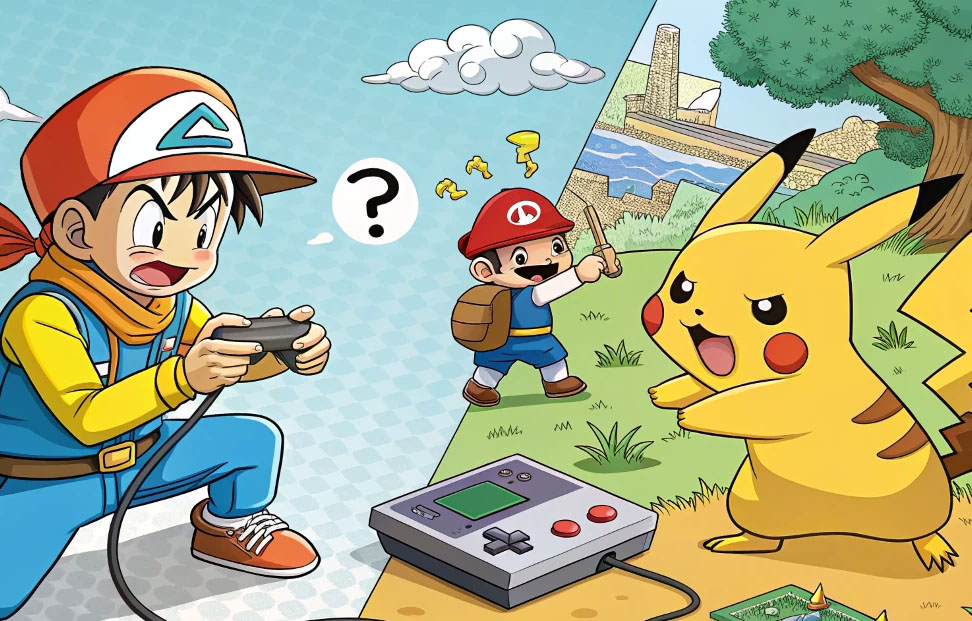
A global hit started with a net and a box
Imagine: you’re walking through tall grass, your heart pounding, and you know something rare is hidden. Not in a game, but outside, in real life. For Satoshi Tajiri, the creator of Pokémon, that wasn’t fantasy but childhood. He grew up in Machida, much greener then than it is now, and spent his days collecting insects and small creatures. So fanatically, in fact, that he earned the nickname “Dr. Bug.”
And it was precisely that feeling—the hunting, finding, saving, and trading—that he wanted to recreate later. Only not with real beetles, but with digital creatures.
From insect hunting to “Gotta Catch ‘Em All”
The basic idea of Pokémon sounds obvious today: discover creatures, catch them, train them, and expand your collection. But in the 1990s, that was unusual. Tajiri saw a perfect play rhythm in his childhood hobby: you go out, you catch something new, and every find feels like a small miracle.
That also explains why Pokémon isn’t about “destruction,” but about “collecting.” Curiosity is at the core, not aggression. You’re not a hunter who eliminates everything; you’re a gatherer who wants to understand a world.
The secret weapon was a cable
This is where it gets truly brilliant. Tajiri saw something in the Game Boy that almost everyone considered a minor detail: the link cable. Two devices that could talk to each other.
That simple idea gave Pokémon its magical social twist: trading. Suddenly, it wasn’t just about what you could find, but also about what your friend had. Some creatures could only be obtained through trading, literally creating the same thrill as trading cards or, yes, collecting insects with friends.
A childhood that vanished, and a world he rebuilt
While Tajiri grew up, Machida changed rapidly. Green spaces gave way to concrete, fields disappeared, and the natural world where he found his treasures shrank. Pokémon thus became a kind of time capsule: a way to preserve that lost adventure, but in a video game.
That’s why Pokémon so often begins in grass, forests, water, caves. It’s not just scenery. It’s a digital version of wandering around in nature, looking for something you’ve never seen before.
From Japanese hit to global phenomenon
The first games, Pokémon Red and Green, were released in Japan in 1996. What followed became pure cultural history: games, cards, animation, films, toys, all rolled into one. When Pokémon launched in the US, Nintendo even went all out with its marketing. And from that moment on, it was unstoppable.
The funny thing is: no matter how enormous it became, the starting point remained small. A child who marveled at beetles in the grass, and found that feeling so important that he wanted to share it with the whole world.


