


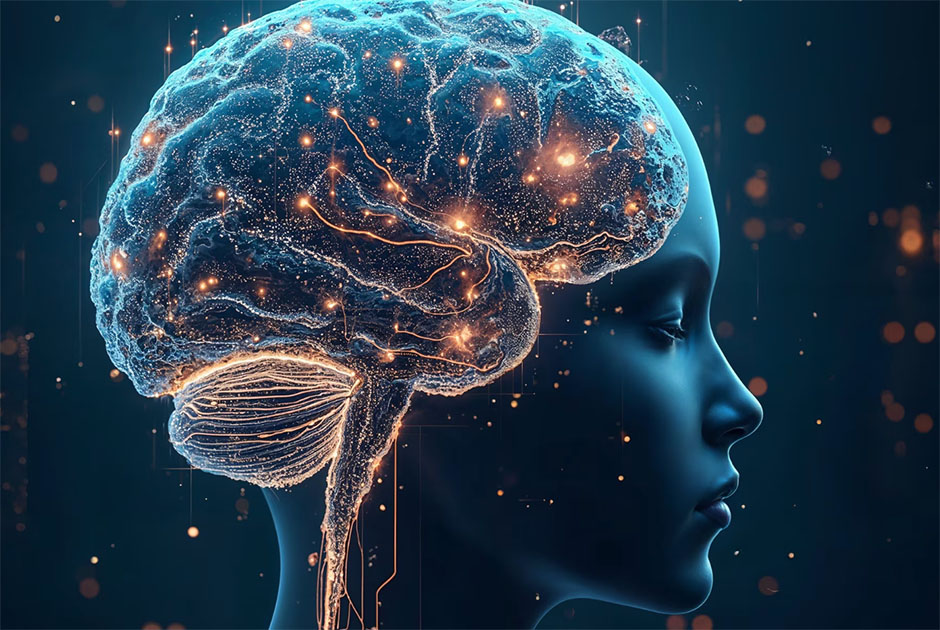
The mind-blowing calculation: 2% weight, 20% energy
Your brain weighs only a few percent of your body mass (about 2%), but at rest it uses about 20% of the energy your body consumes. In other words, one small organ requires a fifth of your “energy budget,” even when you are seemingly doing nothing.
“At rest” does not mean “turned off.”
The spectacular part lies in that word: rest. Even when you stare at the ceiling, your brain is not napping. It is continuously engaged in basic functions (such as breathing and temperature regulation), but also in maintenance work: coordinating networks, preparing signals, organizing memories, monitoring systems. Researchers describe how a large part of our energy goes into this spontaneous, continuous background activity.
Where does that energy go?
Your brain isn’t a “thinking machine” that only uses energy when you solve puzzles. It’s primarily a signal factory: neurons must transmit electrical impulses, maintain connections, and constantly restore chemical gradients. That’s expensive. That’s why you see this reflected in other figures: at rest, a remarkably large portion of your oxygen and glucose consumption goes to the brain.
Plot twist: Thinking hard burns surprisingly little extra
This debunks a persistent myth. You sometimes feel “empty” after intense thinking, but the total additional energy expenditure from goal-oriented mental effort appears to be only a small addition to the already high baseline cost, on average. Recent work summarizes it succinctly: the additional metabolic cost of goal-oriented cognition is about 5% above the cost of continuous rest.
Even crazier: children’s brains can absorb even more
In children, this ratio isn’t always the same as in adults. Around the age of five, according to research reports and reviews, the brain can consume an exceptionally large portion of energy. This is linked to rapid development and high activity in brain networks during this phase.


